
Beyond Rent: Building Emotional Wellbeing Through Compatibility-Based Co-Living

David Woods
Content Writer

Co-living has redefined urban housing. For young professionals, digital nomads, and students, shared spaces offer affordability, flexibility, and built-in social networks. But while rent may be shared, emotional well-being often isn’t considered in the matching process.
Too many shared living arrangements begin with convenience and end with tension.
Easy Pairing shifts the focus from simply filling rooms to fostering emotionally healthy living environments through AI-driven compatibility matching.
The Emotional Side of Shared Housing
Living with others affects more than daily routines; it shapes stress levels, productivity, and mental health. Poor roommate alignment can lead to:
- Constant friction over noise or cleanliness
- Passive-aggressive communication patterns
- Social isolation despite shared walls
- Anxiety about common spaces
- Early lease exits
Housing providers typically screen for payment ability and basic preferences. But emotional compatibility rarely enters the equation.
Matching for More Than Availability
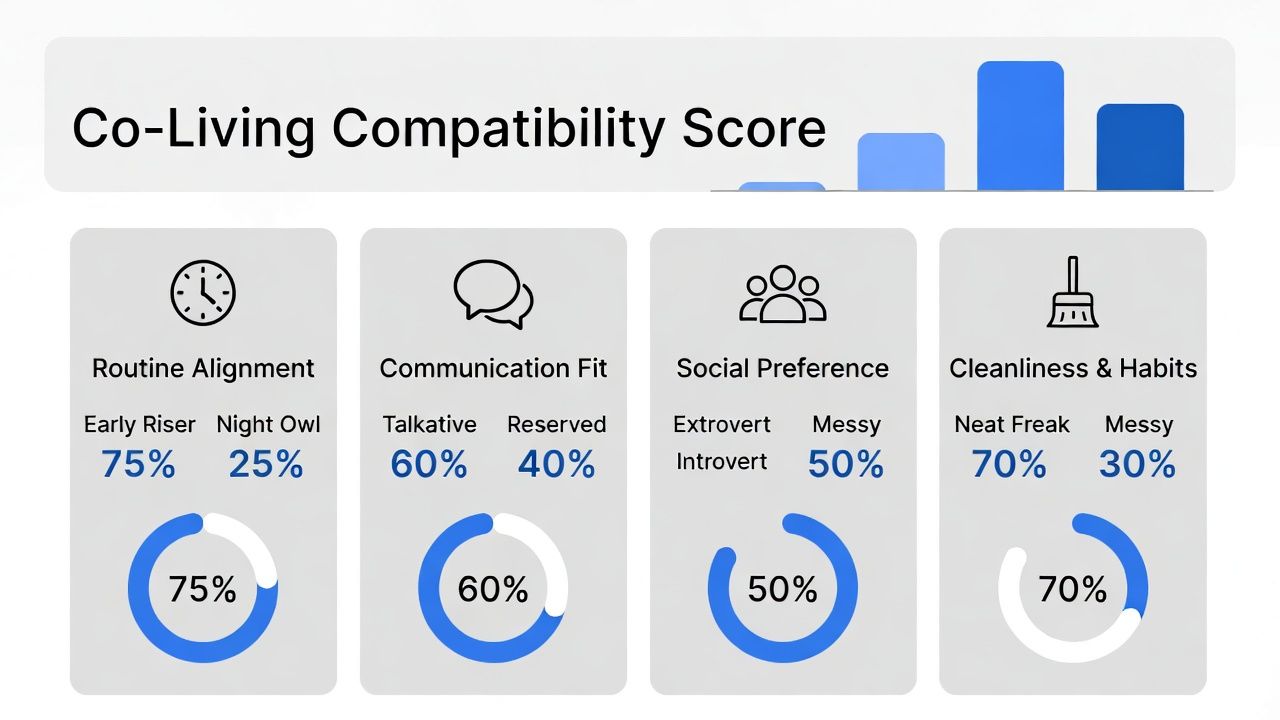
Easy Pairing analyzes the deeper factors that determine co-living harmony:
- Communication style (direct, reflective, reserved)
- Social energy (private, moderately social, highly interactive)
- Lifestyle rhythms (early riser vs. night owl)
- Wellness habits and boundaries
- Shared interests and long-term goals
Rather than random placement, residents are grouped based on how they’re likely to coexist peacefully and even thrive together.
When Compatibility Improves Wellbeing
When roommates naturally align, shared housing transforms:
- Conversations feel easy instead of forced.
- Conflicts are resolved respectfully.
- Shared spaces are used comfortably.
- Residents feel supported during stressful periods.
- Homes become emotionally safe environments
Instead of surviving a lease, residents enjoy it.
A Competitive Edge for Property Managers
For co-living operators and property developers, compatibility-based placement reduces:
- Tenant turnover
- Lease disputes
- Mediation requests
- Negative reviews
- Vacancy periods
At the same time, it increases resident satisfaction and community reputation. In a competitive housing market, emotional well-being becomes a differentiator.

Designing Healthier Urban Living
As cities grow denser, shared housing will only expand. But proximity alone doesn’t create connection. Intention does.
Easy Pairing enables housing providers to design communities, not just allocate rooms. By aligning personalities, habits, and social energy, co-living spaces evolve into support systems that enhance mental health and daily happiness.
The Next Evolution of Shared Homes
Rent may cover square footage, but compatibility shapes experience.
When emotional well-being becomes part of the housing equation, co-living moves beyond practicality and becomes purposeful, offering residents not just a place to stay but a place to belong.
In summary:
Easy Pairing brings emotional intelligence into co-living. Through AI compatibility matching, it helps residents share more than expenses; they share harmony, respect, and connection, creating homes that truly support well-being.
Ready to transform your group matching?
Join thousands of organizations using Easy Pairing to create better teams and connections.
Get Started Free